Stephen Boyle, Master Mason and Robert F. Rodriguez Photo Journalist take us up on the Southwest Tower. This is where the fixing of stones took place some 35 years ago.
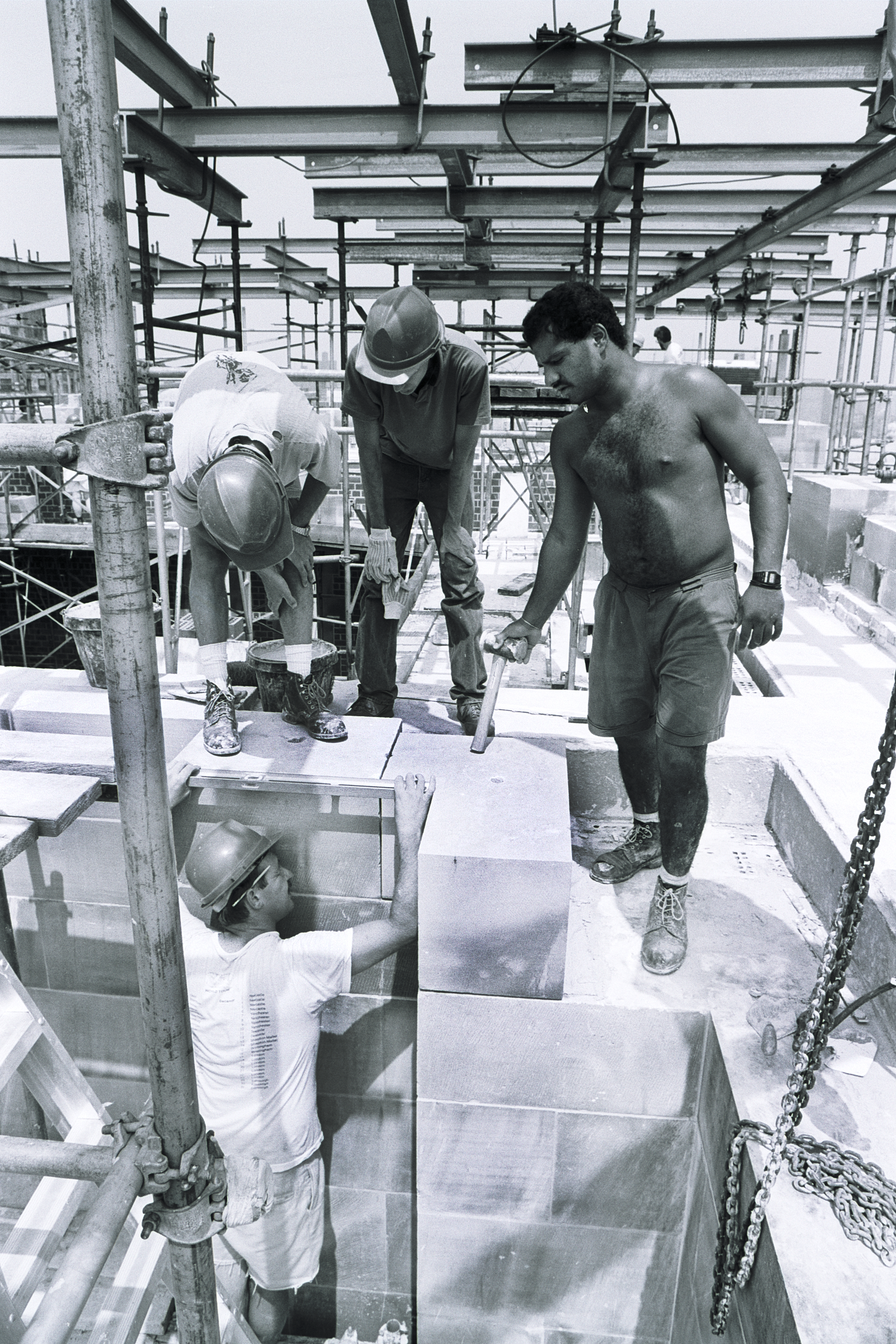
“The vertical face planes of the buttress’ inside corner are being aligned at the top arris using a level as a straight edge. Edgar Reyes is at the ready to ‘adjust’ stone’s position by use of a raw hide hammer.”
-Steve Boyle
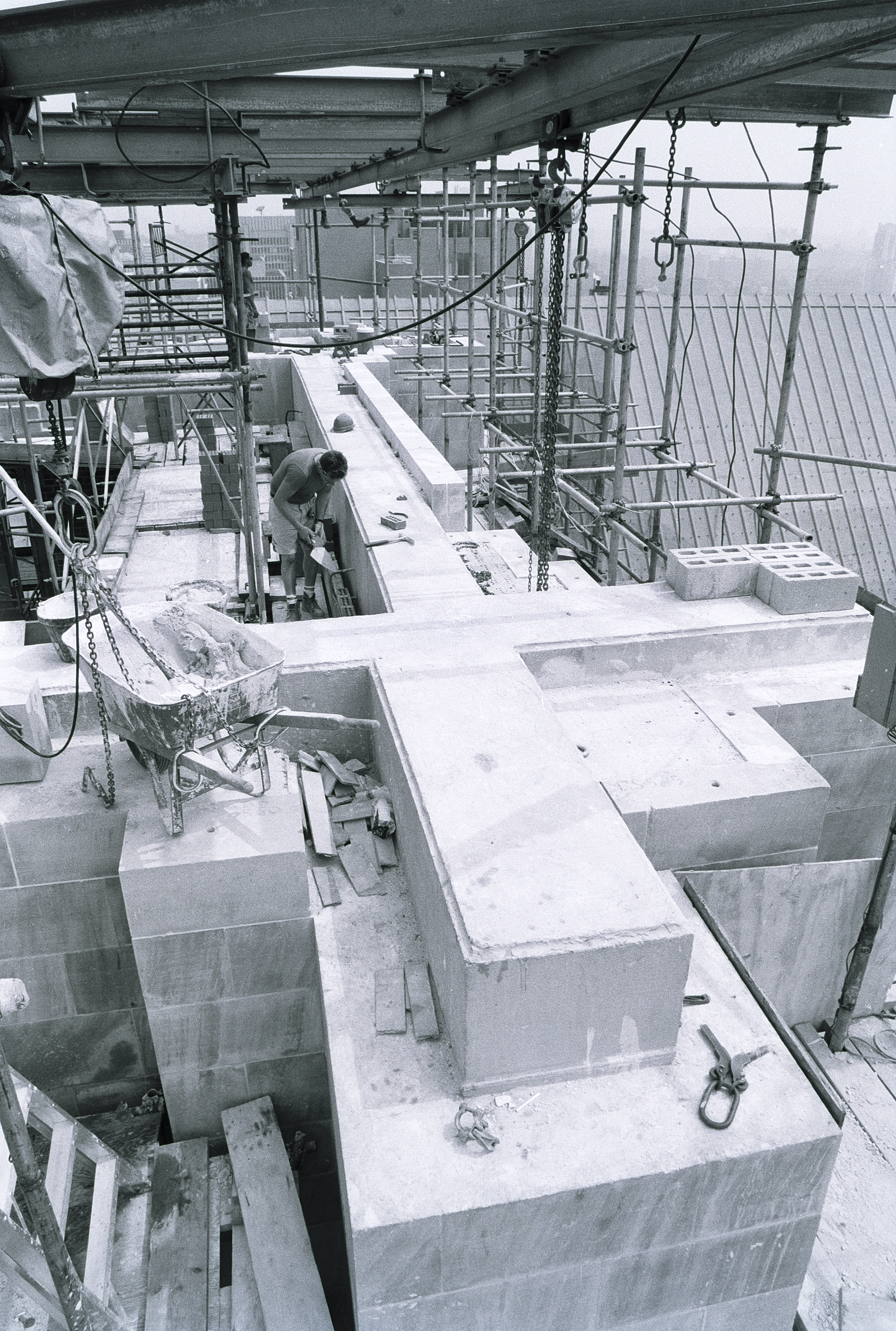
This shot of the East elevation shows the upper portion of the concrete ring beam being encased with stone on the exterior, and brick on the inside wall replacing much of the hearting for several courses which was normally brick, scrap stone or concrete block. “In the foreground showing the SE buttresses there is a split pin lewis that was inserted into the hole drilled into the top bed of the stones (holes can be seen on the 3 buttress stones) enabling them to be hoisted and subsequently set on the wall. The top of the picture shows part of the monorail system used for setting stone and moving materials around the job. Top left corner shows the electric hoist with a wheel barrow full of mortar attached, this was the hoist that did the initial pick when materials came out of the elevator.
“The short beam from which it was suspended over the landing platform connected to the SE corner of the monorail system and a load could be transferred either to the south or east elevations. When this picture was taken the height of the tower had increased to the point where the head room between the wall and the monorail was so reduced that it had become difficult to set stones because of the shortness in the length of chain. (The longer the chain, the greater the ease in positioning a stone in its precise location). Only one more course, the cornice would be installed before the monorail and its support beams would be dismantled and a further 30 feet of scaffolding added. Dismantling was also necessary at this time to allow installation of the bell frame steel.”
– Steve Boyle
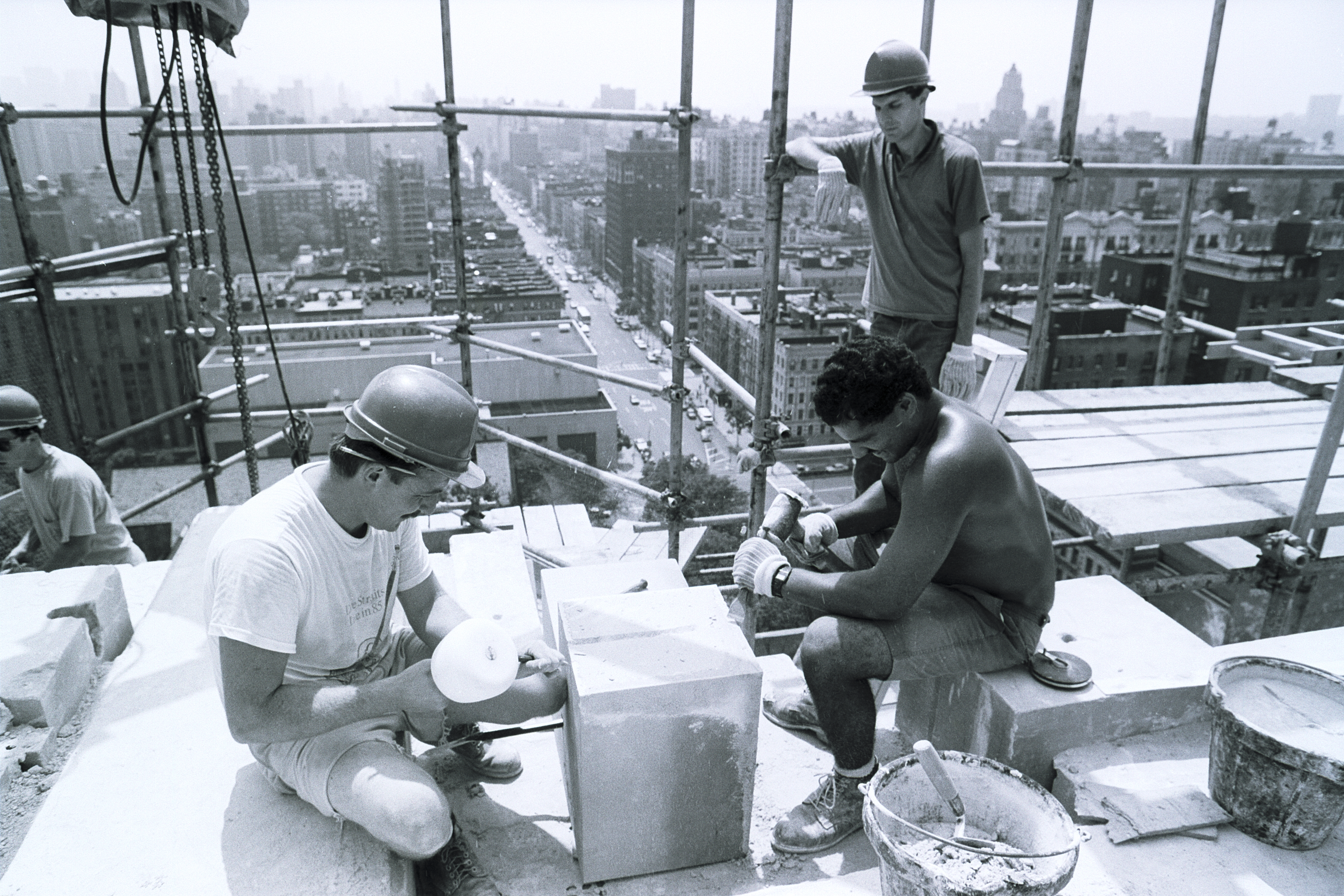
“Occasionally, a stone would not fit for one reason or another (out of square slightly too big in height, too long etc.) If only slight modification was needed, the piece would be dressed by the building crew. It saved time rather than to return it to the shop. This is being undertaken in the picture.”
– Steve Boyle

“Lowering a stone into position, the first course of the “C” zone. This during the architecture students summer program. Note the short length of the lifting chain. The cornice would be the last course to be set before the Bell Frame was erected. Then the next 30 feet of scaffolding installed.”
-Steve Boyle
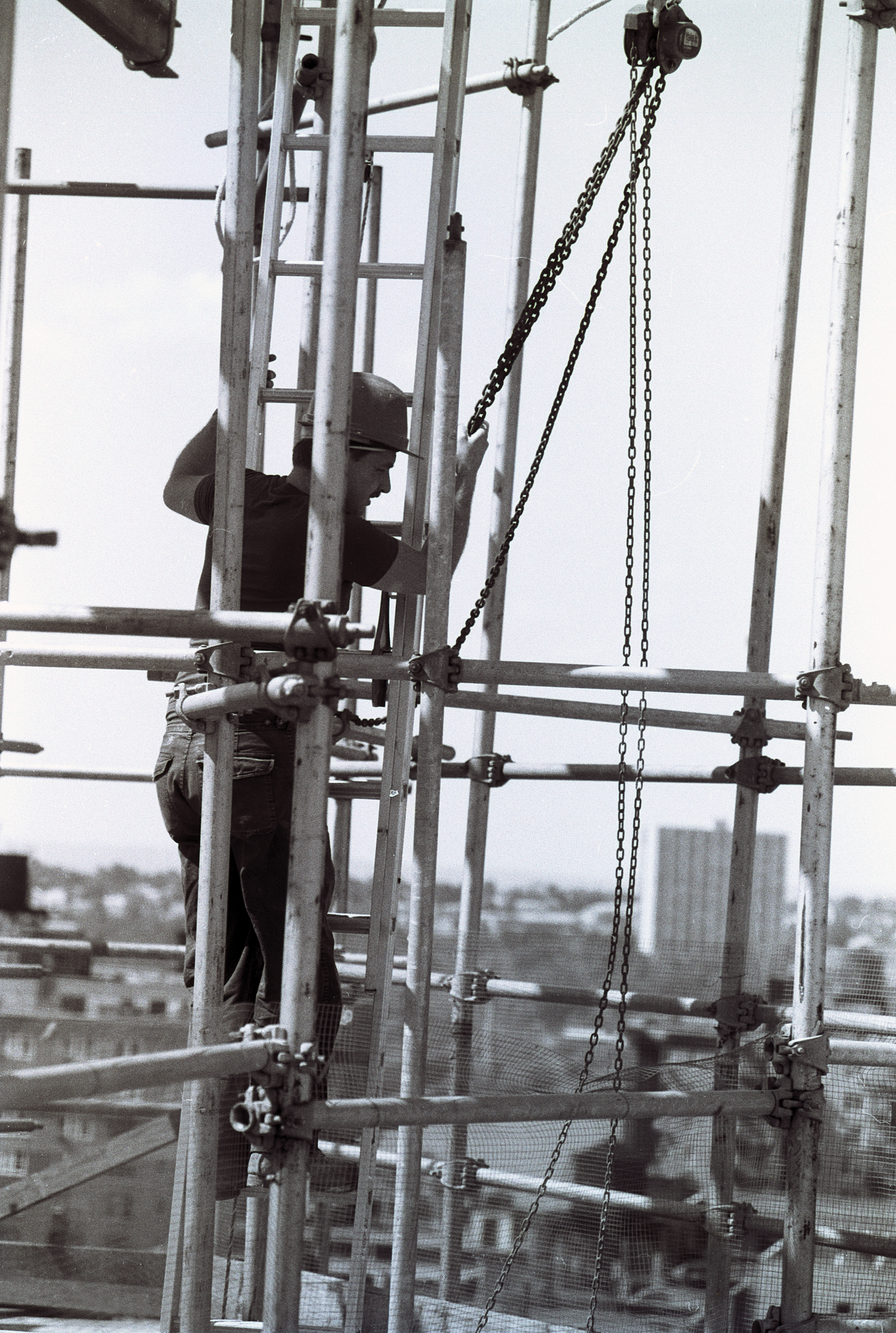
“When chain hoists were not in use we would stow the chains to prevent the slack from being blown around by the wind, potentially causing damage to the stone and entanglement.”
– Steve Boyle
The Master Mason looks forward
“….by this point, the tower construction had really gained momentum and the completion although a long way off was seeming as if it could become a reality. I felt we’d all come a long way since the first corner stone was set in the fall of 1982 and was excited about the prospect of actually being around when the last pinnacles of the tower were in place. Quite a few apprenticeships had been completed and there were now a number of skilled, talented and productive artisans. We had completed fabrication and installation of “A” and “B” zones, the B zone gablets being the most exciting and challenging installation that any of us had been involved in. The stone shop was turning out a large volume of highly skilled trade work and the carving shop was well established and exploding with artistic talent.
Installation of the of the “C”zone was well underway, the reinforced concrete ring beam that tied everything together below the bell frame had been installed (the installation of reinforcing bars and form work all accomplished in house), the “E”Zone was in the process of fabrication and the plans for the bell frame were in the works. The setting crew was looking forward to speeding up the operation because the “D” zone, the next section of the tower, had fewer stones in each course due to the spaces created by the window openings of the Bell chamber and the mullions that had been machined in Indiana would run through several courses so it would be like setting 3 stones at once in some areas. After the D zone, there would be more exciting and challenging work setting the triple arches for the roof support and the arches which topped off the louvered bell chamber windows. From then on it was still more interesting work all the way to the top of the crowning pinnacles, icing on the cake.
Sadly we didn’t know that we were in fact close to the end of the Tower construction due to lack of funds. There would be a short intense burst of activity with the installation of the bell frame, the “C” zone weathering courses and a small section of the “D” zone before the plug was finally pulled for Cathedral work. The focus thereafter would be on commercial work the profits from which it was hoped would eventually fund the completion of the Tower.” -Stephen Boyle
From my Viewpoint…Robert F. Rodriguez
Photographing on the Tower presented numerous challenges. In many cases I could not back up enough to get the right angle. I was working on the same narrow and precarious planks as the crew so I had to be creative and resourceful. Depending upon how many levels of planks were available I could shoot above or below the work being done. I was comfortable enough climbing around the pipes to get into a better position. One time (and only once, thankfully) I was photographing above the work and I dropped a lens. Luckily it wasn’t a long drop and the lens hit mainly on its rubber lens hood so no damage to the equipment or any of the crew.
I also borrowed or rented several “ultrawide” lenses or cameras to give a different look to the work. The trick with using ultrawide equipment is to minimize the distortion so that all the lines of stones were not severely out of wack.Being up on the tower on a wonderful summer afternoon was also a great treat. I had fabulous vistas in all directions and I tried to incorporate those views into many of the photographs. When the course with all the carved figures was in place I managed to get the carvers to pose next to the work – Cynie Linton pictured with her Pilgrim of Santiago de Campostella, Rubin Gibson with his lion figure and Jeep Kincannon next to his greenman. I also got Dean Morton to pose with a carving by Joseph Kincannon on one of the corners. It’s my favorite portrait of the Dean. As work progressed I started planning on how I would photograph the last stone in the tower being set into place. Could I get into a bucket on a crane as the last pinnacle was set? Could I have the workers build me an extra platform allowing me a clear angle? I was even looking into a balloon with the camera mount on it – in the days before drones. But none of that came to pass as the tower is now a half-built monument. Whenever I pass the Cathedral I look up and see the work of the stone masons and savor the times I spent there. – Robert F. Rodriguez
■