Categories
Divine Stone

Archivolts, Angels, and Sibyls

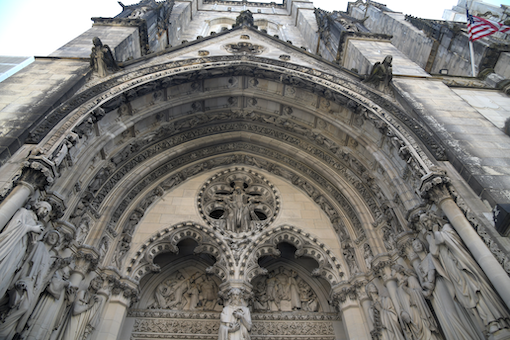
For this final article in a series on the Martyrs Portal, we will lift up our eyes to the heavens as we examine the archivolts, the three ornamental bands of voussoirs on the underside of the arches spanning the portal from side to side. 
Archivolts, Angels and Sibylline Squatters
Archivolts, Martyrs Portal. May 8, 2026. Photo: Robert F. Rodriguez

The archivolts are decorated with angels, as they are at many another cathedral. The architect intended that the three major portals of St. John the Divine should follow this longstanding Gothic tradition. To date, his intention is unrealized. The Martyrs Portal, completed 1935, is the only one with angels in its archivolts.

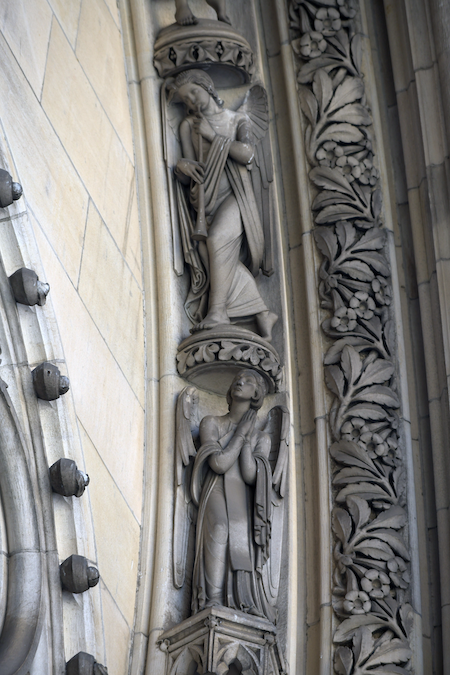
There are twelve sculpted angels on each band, thirty-six in all. It is worth craning one’s neck for a good look at them. Each angel is unique, and each has a job to do. My own informal census counted twenty-three angels holding scrolls, seven with trumpets, one with a lute, one with a censer, and four with hands folded in prayer or adoration.
Archivolts Angels
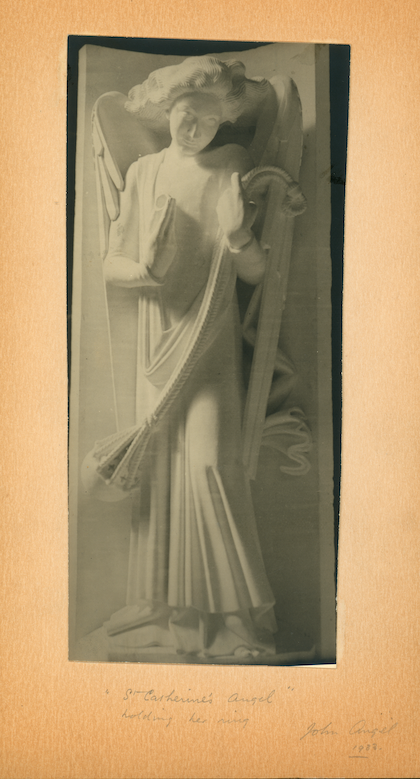
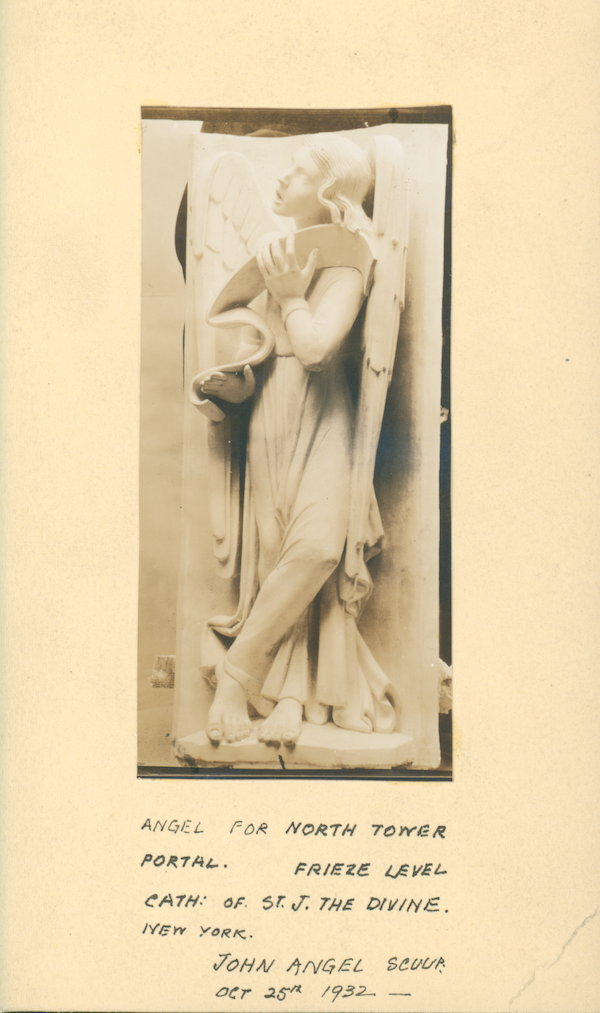
Model of angel with scroll. Notes: Angel for North Tower Portal. Frieze Level, Cathedral of St. John the Divine, New York. Photo: Cathedral Archives.
John Angel, sculptor.
Oct 25th 1932
Archivolts Angels
John Angel model of angel with censer. 1933. Photo: Cathedral Archives.
Archivolts, Angels
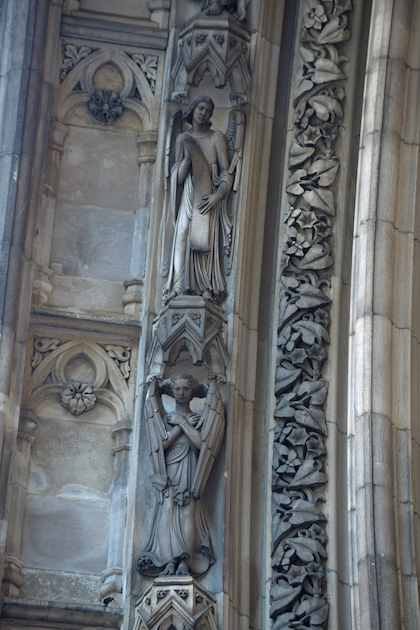
Angel with scroll, angel at prayer. North side of portal archivolts. Photo: Robert F. Rodriiguez.
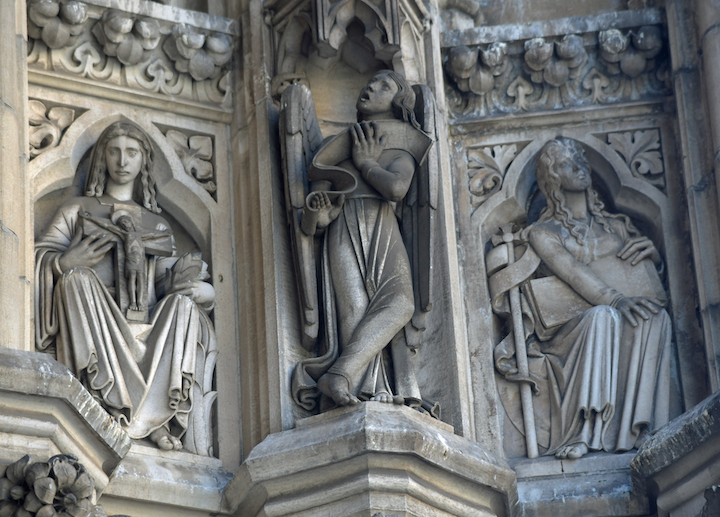
Angel with trumpet, angel with scroll. South side of portal archivolts. Photo: Robert F. Rodriguez.

There are enigmatic carvings of eight seated women interspersed with the angels on the lowest rank of archivolts. They sit directly above the eight full-length figures on the portal’s north and south sides. Visitors frequently overlook them or, if they do observe them, usually walk away wondering who they are and how they relate to the saints below them.

As to who they are – they are sibyls, ancient seers who lived in the age before the coming of Christ and were later believed to have prophesied his birth, crucifixion, and resurrection. 

As to how they relate to the martyrs in the portal, the answer is – not at all. The architect intended the sibyls for the central portal, where they would have been appropriate companions of other forerunners of Christ. Due to difficulties with the central portal project, the sibyls were installed instead in the north portal, even though they are unrelated to the portal’s theme of martyrdom. The sibyls do not really belong with the martyrs. One might think of them as squatters. Nevertheless, they do bring to the portal a vibe of the mysterious and exotic.

About Sibyls

Sibyls were prophetesses in the Greco-Roman world, with origins in the ancient Near East. Sibyls resemble oracles in that they were invariably female and uttered their prophecies while in an ecstatic state and in language that was often obscure and ambiguous. 

But while an oracle was the agent of a specific Greek god and was consulted at a temple dedicated to that god, sibyls were, in a sense, freelancers. They were not necessarily aligned with specific gods. They dwelt in caves and grottoes rather than temples. Their names derive from the locations with which they are associated.

The sibyl of Cumae in southern Italy is the most notable sibyl of the classical world, best-known for her role in the Aeneid. Vergil vividly describes the scariness of an encounter with a sibyl: … suddenly all her features, all her color changes, her braided hair flies loose and her breast heaves, her heart bursts with frenzy,  she seems to rise in height, the ring of her voice no longer human …(Aeneid VI.59-63, transl. Robert Fagles).

Cave of Cumaean
Purported cave of the Cumaean Sibyl in Pozzuoli, Italy. Photo: Bobbylamouche via Wikipedia

The prophecies of the Greek and Roman sibyls were written down in Greek hexameters and collected in the Libri Sibyllini (Sybilline Books). Romans revered the sibyls; the Senate would consult the Sybilline Books in times of crisis. In the fourth century, with Christianity having become the state religion, the Roman emperor Honorius ordered the pagan Sybilline Books destroyed.

Meanwhile, a new tradition of sibylline literature had begun among Hellenistic Jews as early as the second century BCE. Writing in Greek hexameters under the names of the classical sibyls, Jewish writers inserted prophecies for Israel and attacks on polytheism into the pagan oracles. By the second century CE, Christians authors had taken over, as scholar Anke Holdenried explains:

Christian authors thus placed Christian prophecies concerning both the Nativity and the Second Coming into the mouth of the Sibyls to use apparently pagan prophecies to undermine pagan polytheism from within its own ranks …

Another scholar, Jorge Guillermo, writes of how the pagan sibyls “acquired new identities as veritable Christian visionaries … They would come to enjoy the same level of legitimacy as had been previously granted only to the long-hallowed prophecies of the respected canonical prophets in the Hebrew Bible.”

The Judeo-Christian writings were collected into the fourteen books of the Oracula Sybillina (Sibylline Oracles). Many of the early Church Fathers treated the Oracula as authoritative when they cited it in their own writings. Guillermo points out that in the Divine Institutes, the third-century theologian Lactantius “makes more references to the sibyl than he does to all the Old Testament prophets combined.”

By the fifth century, interest in the Oracula was waning along with knowledge of Greek as the western empire dissolved and the Latin-speaking western church grew further away from its Greek-speaking brethren in the east. 

The rediscovery of classical literature and culture in the early years of the Renaissance reignited interest in sibyls. By the quattrocento, sibyls had become a familiar subject in art and would remain one throughout the Renaissance. Below, Perugino’s fresco demonstrates that the sibyls were once again on an equal footing with the Hebrew prophets. Their names appear in small letters at the bottom of the picture.

Sybyls and Prophets
Sibyls and prophets. Pietro Perugino, artist. Fresco, 1496. Photo: Web Gallery of Art.

The most famous sibyls of all are those on the ceiling of the Sistine Chapel, where Michelangelo has them alternate with Hebrew prophets around the ceiling’s perimeter. 

Classical scholarship would eventually debunk the notion that Greco-Roman sibyls prophesied the Christian faith. The Gothic Revival of the nineteenth century brought about a resurgence of interest in sibyls, hence architect Ralph Adams Cram’s intention to include them in the iconographic program for the cathedral’s west front. 

The Sibyls of the Martyrs Portal

There are eight sibyls in the niches above the jamb figures. All but two of them hold books containing their prophecies. Each sibyl is accompanied by one or two attributes signifying the nature of her prophecy.

Starting on the north side and reading left to right, the sibyls are:
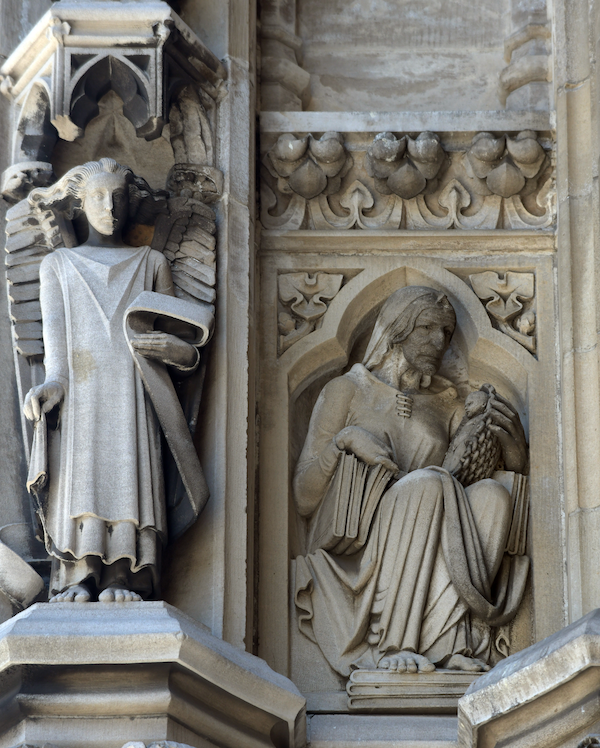
Angels and Sibyls
Sibyl Cumana. May 8, 2026. Photo: Robert F. Rodriguez.

Cumana (aka Alamathea), the sibyl of Cumae, holds a sponge dipped in vinegar, a prophecy of the Crucifixion, echoing Psalm 69:21: “In my thirst they gave me vinegar to drink.” 
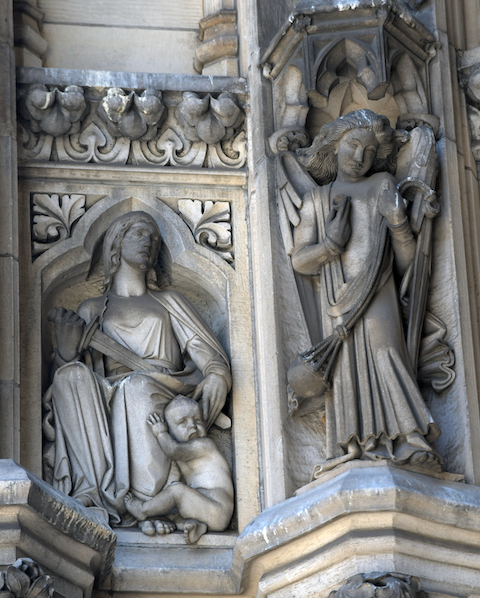
Sibyls
Sibyl Europa. May 8, 2026. Photo: Robert F. Rodriguez.

Europa holds a sword and an infant, a prophecy of Herod’s massacre of the Holy Innocents (Matt. 2:16-18).
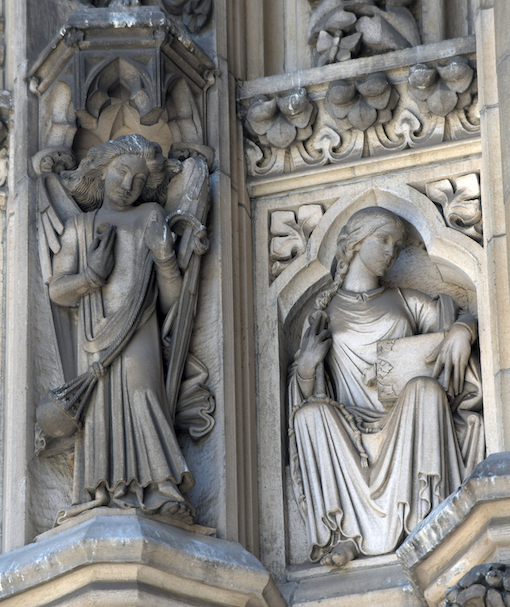
Sibyls
Sibyl Agrippa. May 8, 2026. Photo: Robert F. Rodriguez

Agrippa (or Agrippine) has in her lap a scourge, a prophecy of the scourging of Christ by Roman soldiers (Mark 15:15), the high priest’s men (Matt. 27-67, Luke 22:63), and by Pontius Pilate himself (John 19:1).
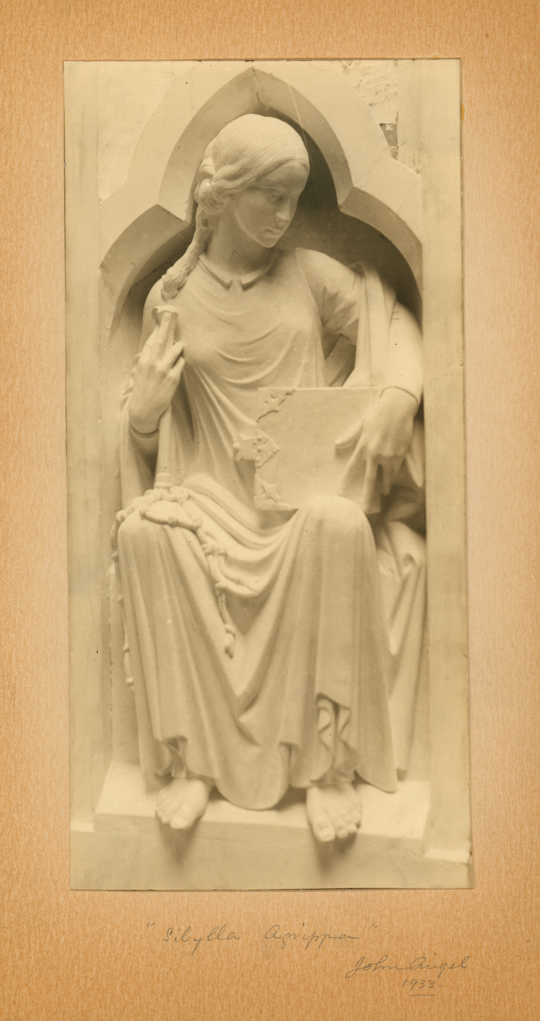
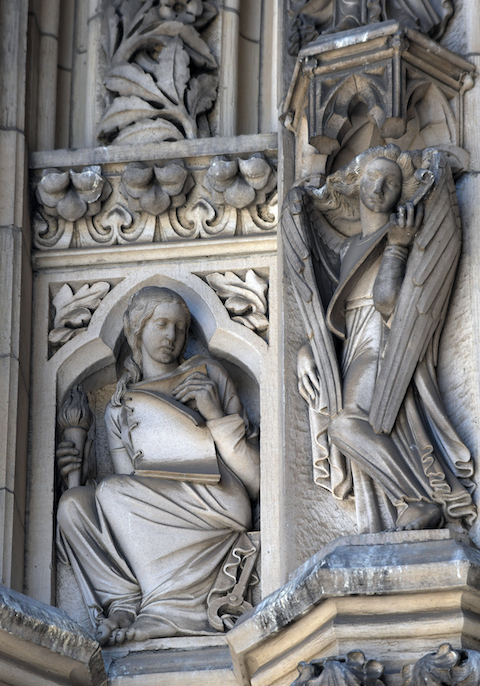
Sibyl Agrippa Model
Model of Sibyl Agrippa. Photo: Cathedral Archives.
Sibyl Libyica
Sibyl Libyica. May 8, 2026. Photo: Robert F. Rodriguez.

Libyica holds a torch in her right hand, a prophecy of Christ “the Light of the World” (John 8:12). Alongside her left foot sits a pair of pincers. Pincers are sometimes included in the Arma Christi, the objects associated with the Passion. Pincers would have been used to remove the nails from Christ’s hands and feet. Pincers do not appear to be a common attribute of the Libyan Sibyl and their inclusion here may be John Angel’s inspiration.

Sibyl Libyica Model
Model of Sibyl Libyica by John Angel. Photo: Cathedral Archives.

Continuing on the south side, again reading left to right:
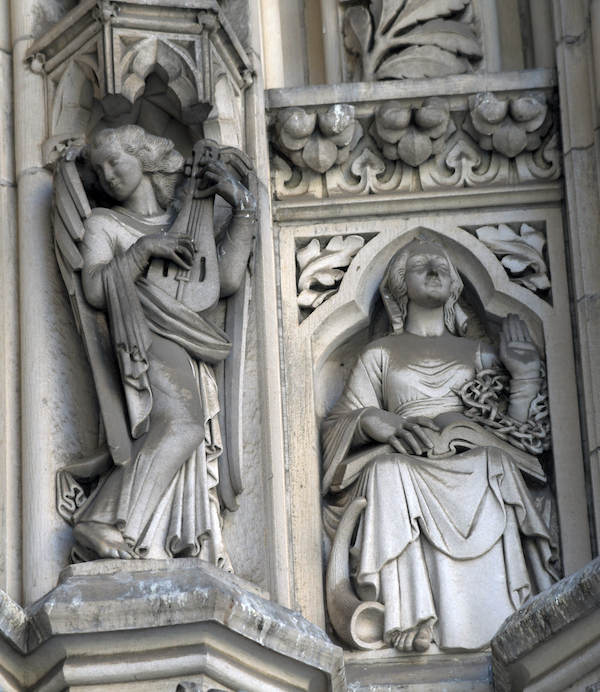
Sibyl Delphica
Sibyl Dephica. Photo: Robert F. Rodriguez.

Delphica is not to be confused with the famous oracle of Apollo in Delphi. A crown of thorns, another instrument of the Passion, encircles her raised left arm. Alongside her sits a horn. Other depictions of her have either a crown of thorns or a horn, but John Angel has included both. Scholar Robin Raybould, writing of a different depiction of Delphica, suggests that her horn is a cornucopia that has been transformed into a trumpet. 

Model of Sibyl Delphica
Model of Sybill Delphica, John Angel. Photo: Cathedral Archives
Sibyls Hellespontica and Phrygia.
Sibyls Hellespontica and Phrygia. Photo: Robert F. Rodriguez

Hellespontica holds a crucifix in her lap. Her left hand holds what appears to be the spikelet of a stalk of wheat, a symbol of the Eucharist, the Body of Christ.

Phrygia bears a cross and banner, a prophecy of the Resurrection.
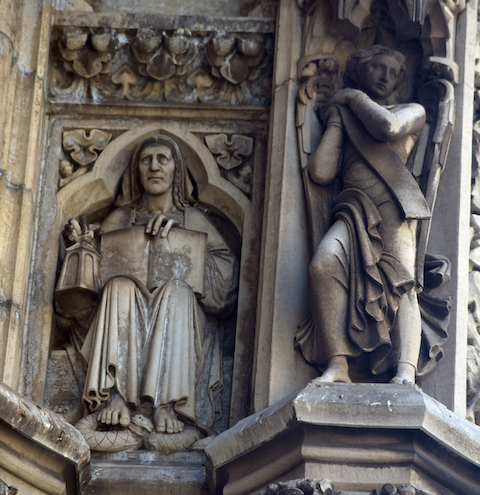
Sibyl Persica
Sibyl Persica. Photo: Robert F. Rodriiguez.

Persica holds a lamp in her right hand as she rests her feet atop a dragon, symbolizing the overthrow of Satan and the “light that shineth in the darkness” (John 1:5).

The Law Bay Reredos

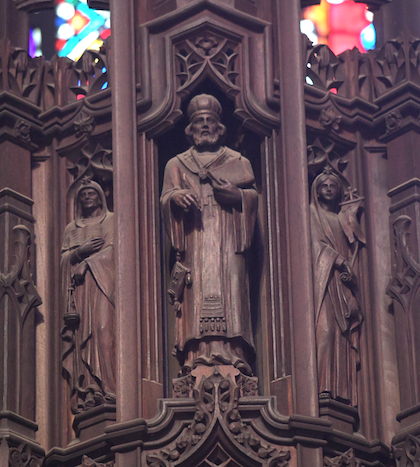
Sibyls can be found in only one other Cathedral location – the elaborately carved wooden reredos in the Law Bay designed by Ernest Pellegrini of the Irving & Casson Company. Pellegrini was on Cram’s A-team of artisans along with John Angel, Charles Connick, Ernest Lakeman and others whose work appears in the Cathedral
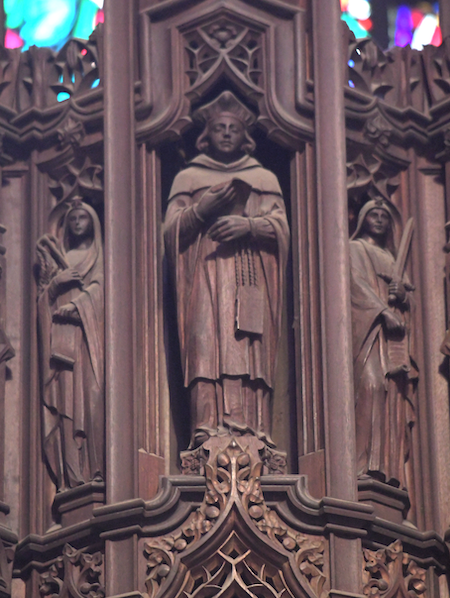
Law library reredos
St. Yves with Sibyls. Law Library reredos, Ernest Pellegrini, sculptor, 1937. Photo: Robert F. Rodriguez.

The central section of the reredos has three spires. On the left spire, St. Yves is flanked by Sibyl Agrippa, holding a scourge, and Sibyl Erythraea, with a sword.
Law Library reredos
St. Philogonius with Sibyls. Law Library reredos. Ernest Pellegrini, sculptor, 1937. Photo Robert F. Rodriguez

On the right spire, St. Philogonius is flanked by Sibyl Persica, holding a lamp and standing atop a dragon,  and Sibyl Phrygia, with cross and banner.

The attributes of sibyls are not as standardized as those for saints. You will find images of sibyls with attributes different than these. For the sibyls they created at the Cathedral, both John Angel and Ernest Pellegrini generally followed the same iconographic vocabulary as did Dutch graphic artist Lucas van Leyden for his well-known woodcuts of the canonical twelve sibyls, c. 1530. The van Leyden sibyls can be viewed at the following site:

https://commons.wikimedia.org/wiki/Category:Woodcut_series_of_Sibyls_by_Lucas_van_Leyden

This is the tenth and final article in a series on the north portal of the Cathedral of St. John the Divine, known as the Martyrs Portal. To the best of my knowledge, the series is the first detailed commentary on the portal’s sculpture and iconography since it was completed ninety years ago. I am deeply grateful to Divine Stone founder Roger Murphy for publishing my work, to Robert Rodriguez for enlivening my articles with his superb photography, and to Wayne Kempton for his faithful stewardship of the Cathedral’s archives and his kind assistance with my research. TF

Sources

Categories
Divine Stone

Angel Escobar: Stone Cutter, Stone Carver

Angel Escobar
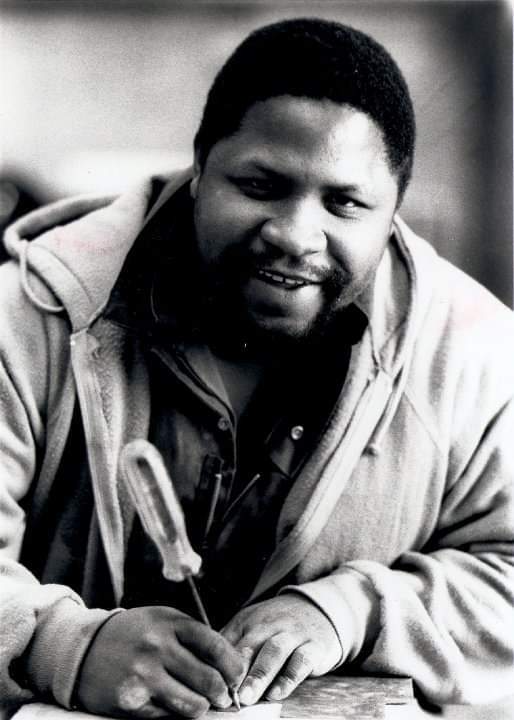
Angel Luis Escobar, August 19, 1959 – September 22, 2026. Photo: Ted Beck

Sisters pay tribute 

On a damp and rainy Sunday Angel Escobar’s sisters and other family members visited the Cathedral of St. John the Divine to pay tribute to the quiet and unassuming stonecutter who recently passed away.

Dina Chiclana, Olga Escobar, Cecilia Escobar and several cousins came together to literally touch stones that Angel worked on when the Cathedral started to build its towers and many dreams in the 1980s and early 1990s.

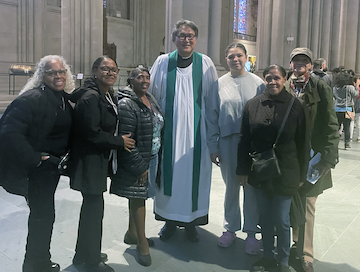
Canon Lee with Escobar family
Angel Escobar’s family visits the Cathedral on Sept. 27, 2026. With Canon Steven Lee are Matilda Vilella (cousin), sisters Dina Chiclana and Olga Escobar, Bella Brunson (Olga’s granddaughter), sister Cecilia Escobar and Pandora Cintron (cousin). Photo: Robert F. Rodriguez

After the service the sisters and cousins met with Canon Steven Lee, Vicar of the Cathedral, who wrote:

“It is especially meaningful to remember someone whose hands helped shape the Cathedral and who was so valued by his fellow stonecutters and carvers.”

– Canon Steven Lee, entering the name of Angel Escobar in the Cathedral’s Prayers for the Dead.

A touching moment came when the group visited the Columbarium to visit Ruben Gibson’s niche. Ruben, one of the Stoneyard’s lead carvers, passed away in 1988. Angel credited Ruben’s support and encouragement for helping him overcome his hesitation to move into cutting and carving stones – where Angel excelled and displayed his artistic side. One of Angel’s sisters, Olga, said that Angel was always shy and preferred to stay in the background, adding that she was the one who defended him in the school yard against bullies.

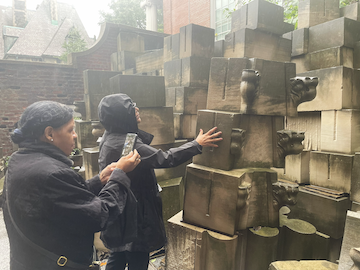
The family group waded through puddles, wrapped against the heavy rain, to reach the pile of carved limestone blocks that were never set on the tower when work stopped.

Escobar family at stacked stones
Angel Escobar’s family at the Cathedral Stoneyard on Sept. 27, 2026. Sisters Dina Chiclana and Cecilia Escobar look at the stone bearing Angel’s initials. Photo: Robert F. Rodriguez.

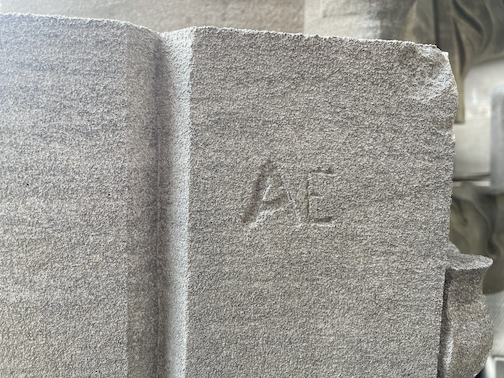
Among the ashlars, column bases, pinnacles and elaborately carved stones, one block – part of a gablet with carved crockets – stood out. On one side, the initials ‘AE’ were clearly visible. This stone was Angel’s legacy that his family could touch to connect with their departed sibling.

Angel Escobar mark
The initials of Angel Escobar are seen on the side of a stone on Oct. 10, 2025 among stones on the Cathedral grounds that were never set on the tower. Stone cutters frequently put their mark or initial on finished stones. Photo: Robert F. Rodriguez.

“I remember being impressed by Angel’s native understanding of sculpture, we were looking together at historic sculptures in a book , and he was talking about them. I remember thinking that I had to go to school to know the things that he was saying off the top of his head. He was a very sweet man and I have many memories of him and his gentle ways.” – Amy Brier

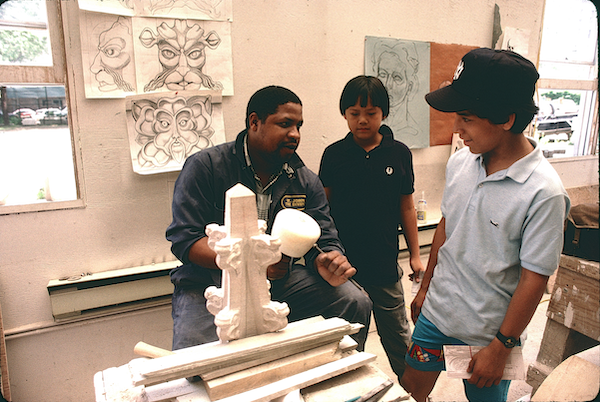
Angel with School Kids
Angel Escobar gives visiting students a lesson on using a long, thin chisel to carve into a pinnacle in June 1988. Photo: Robert F.Rodrigez.

“Apart from being one of the nicest guys you could hope to work with, Angel could always be relied upon to turn out a first rate, crisp and neat piece of finished work. Even the visiting French artisans of the Compagnons were impressed by his skill. Sincerest condolences to Eddie and Angel’s family” – Stephen Boyle

Angel with apprenticeship certificate
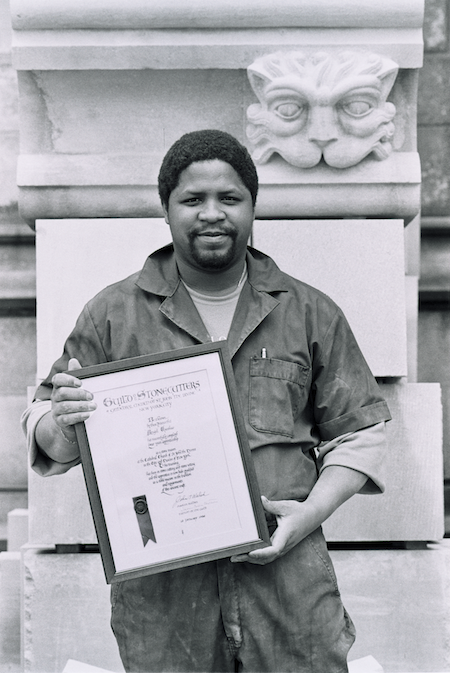
Angel Escobar holds his certificate for completing his four-year apprenticeship as a stone mason on April 25, 1986. It is signed by John T. Walsh, Master of the Works and Dean James Parks Morton, Patron of the Guild. Behind him is a feline carving he completed for the cornice level. Photo – Robert F. Rodriguez

“Angel was very reserved. He had a quiet confidence that was especially important when it came to moving large stones. When I started on the saw, he was just joining the banker masons as an apprentice. I remember Jeep, Poni, Jose and Ruben all commenting on how easy stone cutting came to him. Angel was just a natural. The same went for carving. He just eased into it. Angel was extremely competent in anything he did at the stoneyard, but he liked to keep a low profile. Anyone who worked with him followed his lead, but he was a reluctant leader because he was humble. Joe Schiff said it right; he led by quiet example. Mostly though, I remember Angel for his sense of humor. He had a contagious laugh.” – Joseph Kincannon

Apprentice group
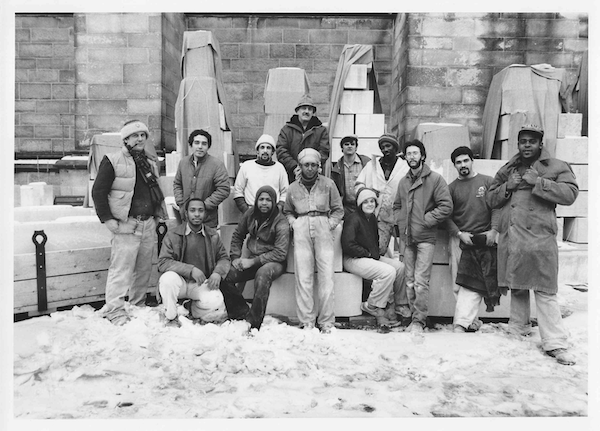
Posing for an undated group photo are apprentice stone cutters Ruben Gibson, Angel Escobar, Arlene “Poni” Baptiste and Cynthia “Cynie” Linton (seated). Standing are Timothy Smith ( with pipe), Manuel Alvarado, Nils Poole, Master Builder James Bambridge, Master Mason Alan Bird, Robert Stanley, D’Ellis “Jeep” Kincannon, Nelson Otero and James Jamerson. Photo: Robert F. Rodriguez.

“It saddens me each time I hear of the passing of one of our masons. It’s different. The impact of it is like brothers or sisters, from another mother has passed on. My condolences to his family and ours. May He Rest in StoneMason’s Paradise. I thank you for the memories.” – Carol Hazel

Angel with the Stonecutters
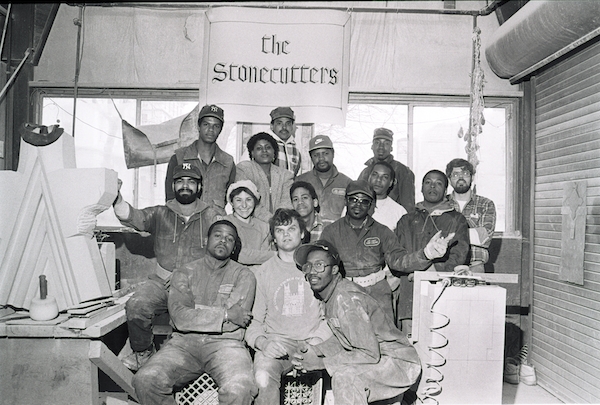
Posing in front of a sign made by Joseph Chiffriller, the stonecutters pose for a group photo on April 2, 1987. Joseph made the sign as a friendly competition with the carvers in the new carving shed.

Front, from left, James Jamerson, Master Mason, Alan Bird, James McKnight.
Second row, Pedro Colon, Theresa “Treese” Robb, Geraldo Perez, Harold Doman, Sid (last name unknown).
Third row: Dwayne Crawford, Carol Hazel, Angel Escobar, Yves Pierre, Joseph Chiffriller.
Top Row: Rudi (last name unknow) and Arthur (last name unknown). Photo: Robert F. Rodriguez.

Angel’s Carving Days

By the spring of 1985 a carving shed was built along the Cathedral’s north wall. Nick (Master Carver Fairplay) moved in along with Ruben Gibson, Cynie Linton, Joseph Kincannon and D’Ellis “Jeep” Kincannon. Nick also had Angel Escobar do some carvings. Angel did not want to do carving full time but “I pulled him (in) a couple of times; he had a very natural ability,” Nick said.

Capitals, gablets, pinnacles and labels stops
Angel Escobar chisels out leafy veins on a foliage carving for a crocket on July 29, 1987.

One of Angel’s works shows a beast with glaring eyes and a broad mustache practically drooping onto the stone below. The other carving resembles a feline animal with curls sweeping away from its face and high arched eyebrows.

Angel feline carving
Angel Escobar, after completing his apprenticeship in stonecutting, gradually moved into the artistic carving area. He works on a feline design for the cornice course in the carving shed on March 19, 1986. According to a March 19, 1986 New York Times article, Angel said his life had been ”saved” by the Cathedral program. Photo: Robert F. Rodriguez

Angel Escobar’s two carvings (south face string course) both show fantastic beasts, something Newt Scamander from the Harry Potter films might be searching for.

Angel Escobar carving grotesque
Angel Escobar carves a grotesque with flowing mustache, large ears and horns into a cornice stone on Feb. 29, 1988. On the wall behind him are his working drawings. Photo: Robert F. Rodriguez

Humble Beginnings

As a boy growing up in East Harlem, Angel Escobar would look across 112th Street at the looming structure rising on Morningside Heights to the West. “When I was small, I used to wonder what that big thing was,” he said. A few years later, he would pick up a mallet and chisel to help build the tower at The Cathedral of St. John the Divine. “I never thought I would be working at the church,” Angel adds. 

“I was hanging out a lot on the streets by the time I was in my teens. My mother had died and I dropped out of school,” Angel remembers. “I had to do for myself.” 

“Me, I didn’t like being in the street. So when I heard the Renegades had given up their chains and stopped fighting to do something for the community, I found out about it,” Angel continues. 

A New York Times article reported, “a youth gang called the Renegades (sometimes spelled Renigades) is using city loan funds and their own labor to create new homes for their families out of a battered and abandoned East Harlem tenement.” This was the beginning of “sweat equity” or “urban homesteading” and Angel started learning the building trades. The outfit he was working for went out of business and the owner recommended that Angel apply to the Cathedral’s Stoneyard program.

As a trainee, the soft spoken and introverted Angel moved limestone blocks around the machinery shop and drove the crane and forklift that transported finished stones from the cutting shed to the stacks by the side of the Cathedral for the first two years. 

Angel among stacks of stone
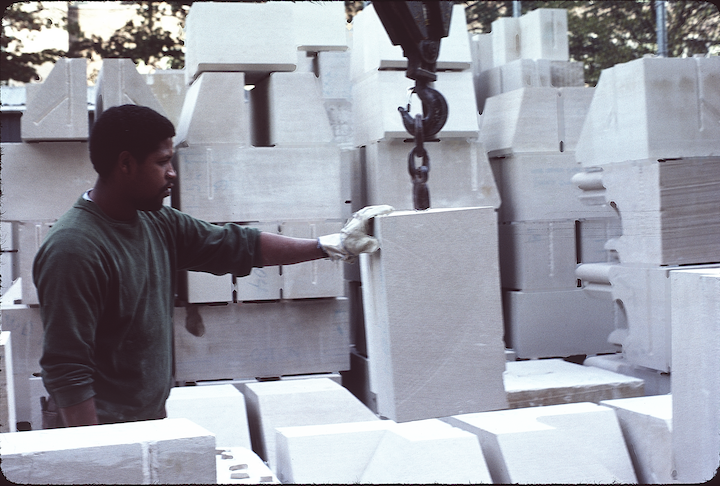
Angel Escobar moves an ashlar. Oct. 1981 photo, photographer unknown

Angel would occasionally be treated to homemade lunch brought to the Stoneyard by his wife Maritza and oldest daughter Angela, who remembers walking through the Cathedral to get to the Stoneyard. As a 5-year-old, “I was afraid of the huge stone statues,” she said.

Angel moving blocks of limestone
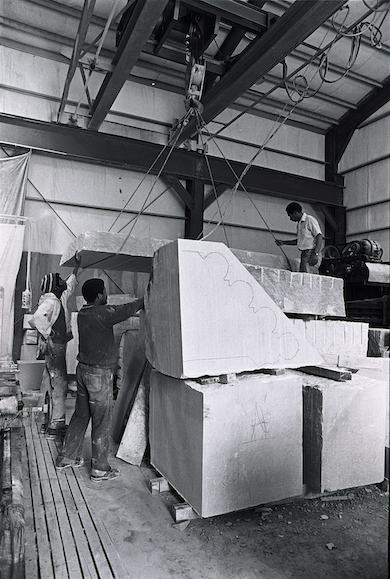
From left, Robert Stanley, Angel Escobar and Ruben Gibson move a long flat limestone slab on May 12, 1981. The triangular block in front shows the template outline in pencil for a column base. Photo: Robert F. Rodriguez

Initially, Angel was intimidated by Master Mason Alan Bird, the primary instructor for the apprentices, and was reluctant to move into stone cutting. “I was scared to be a stonecutter,” he said, “because Alan was so strict, you made a mistake he’d get on your case. I didn’t want to cut stone; I was scared to cut it. I didn’t want to make mistakes.” 

Angel credits Ruben Gibson, a fellow apprentice who started shortly after Angel, for helping him overcome his fears. “Ruben put it in me, he put confidence in me. He made me a stonecutter. He believed in me. I loved Ruben,” Angel said.

Angel and Ruben
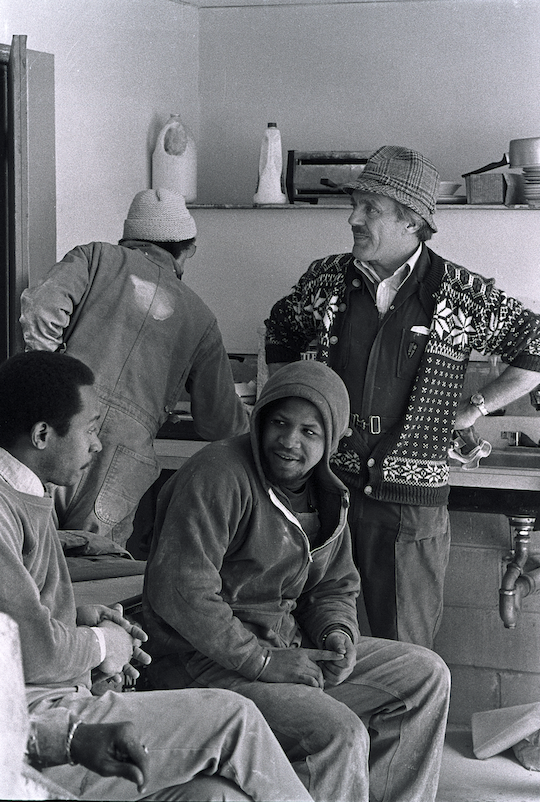
From left, Ruben Gibson, Angel Escobar and James Bambridge, standing, are seen in the lunch room on March 17, 1981. Photo: Robert F. Rodriguez.

Angel credits Ruben Gibson, a fellow apprentice who started shortly after Angel, for helping him overcome his fears. “Ruben put it in me, he put confidence in me. He made me a stonecutter. He believed in me. I loved Ruben,” Angel said.

Timothy Smith recalls that Angel could cut his stones exactly up to the zinc template measurements – but Angel needed some lessons in fractions. At first, Angel had trouble understanding that the larger the number of the fraction, the smaller the measurement actually was. Timothy gave Angel a tutorial on a whiteboard: ½ inch is larger than ¼ inch and 1/64 inch is smaller than 1/32 inch. Angel caught on quickly.

Every time you feel good
Angel Escobar puts the finishing touches on a blank tracery stone on April 30, 1985.The star-shaped gothic design serves as an ornamental member of an 18-foot main gablet. Photo: Robert F. Rodriguez.

In the summer months when construction on the tower was the focus, Angel occasionally worked topside moving stones from below to the construction floor or helping to set stones. This may have been his least favorite job: “I’m afraid of heights,” he confessed.

Angel up top
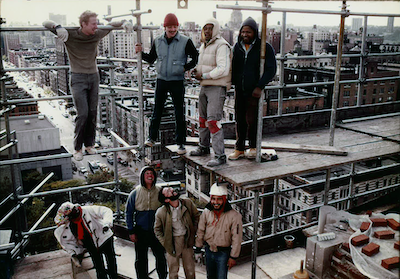
Some of the Stoneyard Institute crew pose for a photo on the tower. Top, from left, Joseph Kincannon, Stephen Boyle, James Jamerson and Angel Escobar. Lower level, from left, Arlene “Poni” Baptiste, Timothy Smithy, D’Ellis “Jeep” Kincannon, Yuri Sosa. Undated photo by Gregory Thorpe, circa 1983. Permission granted to use in archives.

Eddie Pizarro, another stonecutter from East Harlem, compliments Angel’s cutting skills: “To me, Angel had the best boasting pattern. Very neat. All his finished stones looked the same. He always had a steady hand for boasting the stone.”

Angel also got direction from José Tapia. “He taught me a lot,” he reminisces. 

Angel refers to José as “my brother” because José lived with Angel’s family after José’s parents died in an auto accident in Puerto Rico. Angel’s mother and José’s mother were sisters, so Angel’s mother “took him (José) in, a cousin, but raised by my family,” Angel explains.

José also brought in another member of the extended family to the Stoneyard when Eddie Pizarro, another cousin, came on board. All three share the same paternal grandparents who were from Ponce, PR.

cousins 2
In an undated photo provided by Timothy Smith Angel Escobar, José Tapia and Eddie Pizarro pose in front of a gablet assembled on the ground before it was set on the tower.

According to Eddie, the cousins “all had different opinions; we were raised to use what you are good at and make a living in the construction field. The Stoneyard united us and Angel kept us focused,” he said. “I remember (Angel) telling us we are here (at the Stoneyard) to make history and we will always be remembered and, to this day, it is true.”  

cousins
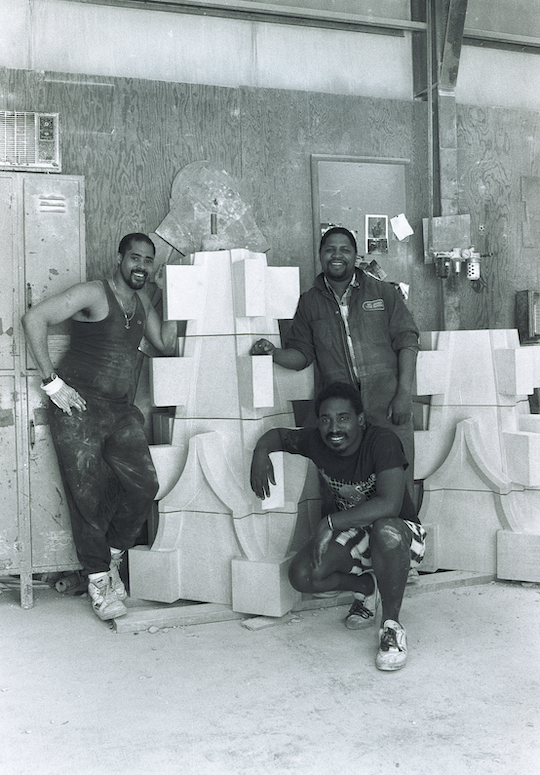
Eddie Pizzaro, left, Angel Escobar and José Tapia, kneeling, pose next to a pinnacle under construction on July 11, 1988. Photo: Robert F. Rodriquez

As Angel’s skills and confidence grew cutting intricate blocks in the cutting shed, another opportunity came up and, once again, Ruben Gibson provided the necessary push.

The Cathedral program needed to start training some apprentice stonecutters in the art of stone carving. Following a blind carving competition, Master Carver Nicholas Fairplay, recognizing Angel’s potential, named him a candidate for the carving program. 

“I was scared to do carving, but then again Ruben came in and put confidence in me and started teaching me. It was kind of easy for me because I used to draw faces on the stones and Ruben picked up on that. Ruben had a way of getting to me,” Angel said. “The way Ruben explained stuff, he made it seem easy. Ruben wanted me in the (carving) shed bad!”

However, Angel was not ready to give up working in the cutting shed so he moved between cutting and carving as the needs dictated. Angel could just as easily cut a springer or tracery stone as he could carve foliage on a crocket or create a unique Gothic face on a cornice stone. Angel must have been very happy to work in the carving shed when his mentor Ruben became lead carver.

Stoneyard Group Photo
Group photo on July 14, 1986.
Seated on ground: Pedro Colon, unknown.
Second row: James Jamerson, Frank Walcott, Angel Escobar, unknown.
Third row: Ruben Gibson (glasses), Eddie Pizarro, José Tapia (standing), Nicholas Fairplay (kneeling), Carol Hazel, Cynthia “Cynie” Linton, Dwayne Crawford. Photo: Robert F. Rodriguez.

Around 1993 funding for the program dried up and the stoneyard was forced to shut down. Looking back over his 13-year career at the Cathedral, Angel would have loved teaching the next generation of stonecutters if the program had continued, a role he saw for himself. “It’s a skill that you never forget,” he said.

Robert F. Rodriguez with Angel Escobar
Cathedral Artist-in-Residence Robert F. Rodriguez visits with Angel Escobar in his Pennsylvania home on June 25, 2025. Photo by Stephanie Azzarone

Asked if he thought the Cathedral would ever resume rebuilding, Angel ponders, “perhaps…that’s the way churches work.”